PCOS Has a New Name. Why This Long-Awaited Change Matters for Women’s Health.
For years, women living with PCOS have said the name never fully reflected what they were experiencing.
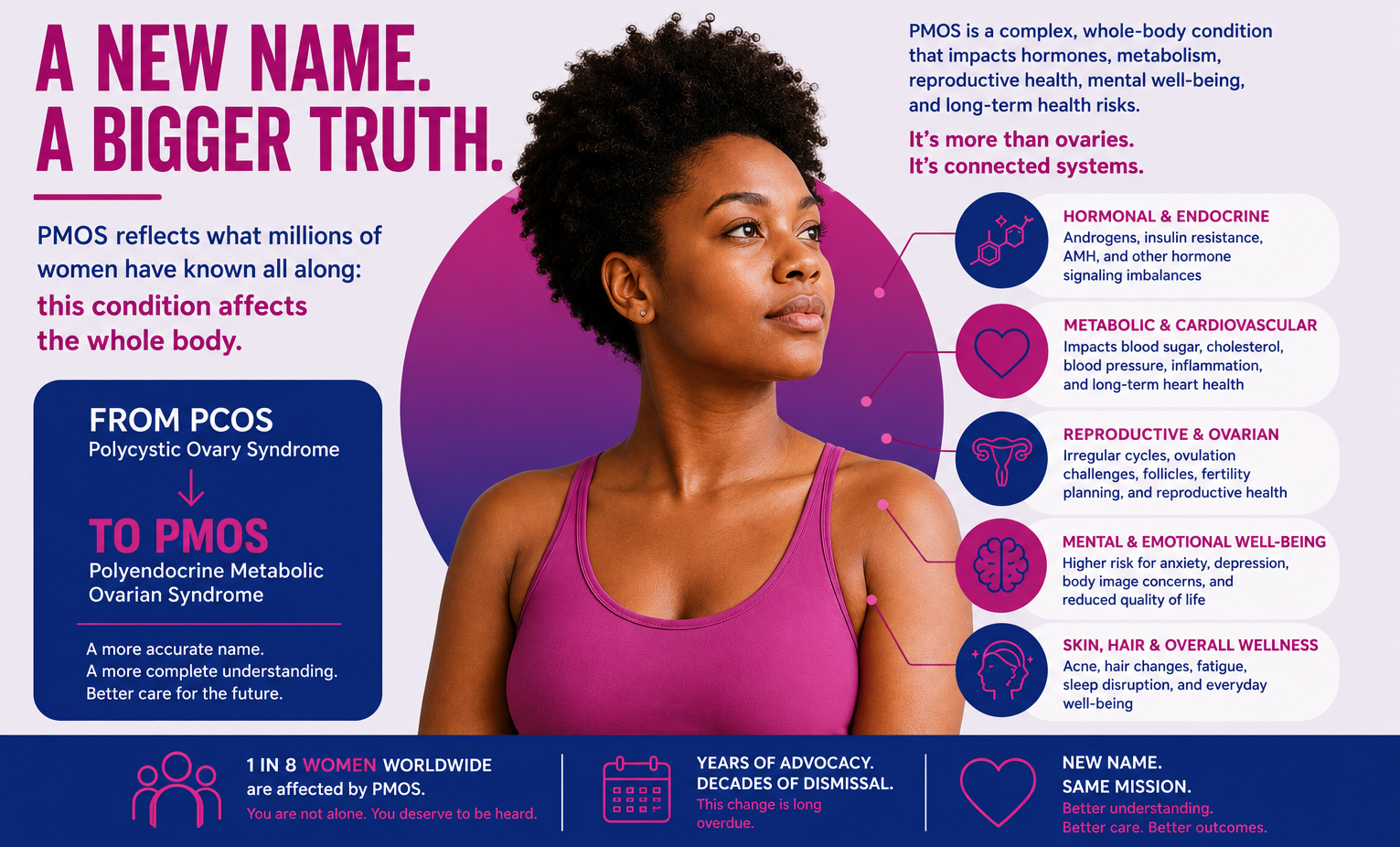
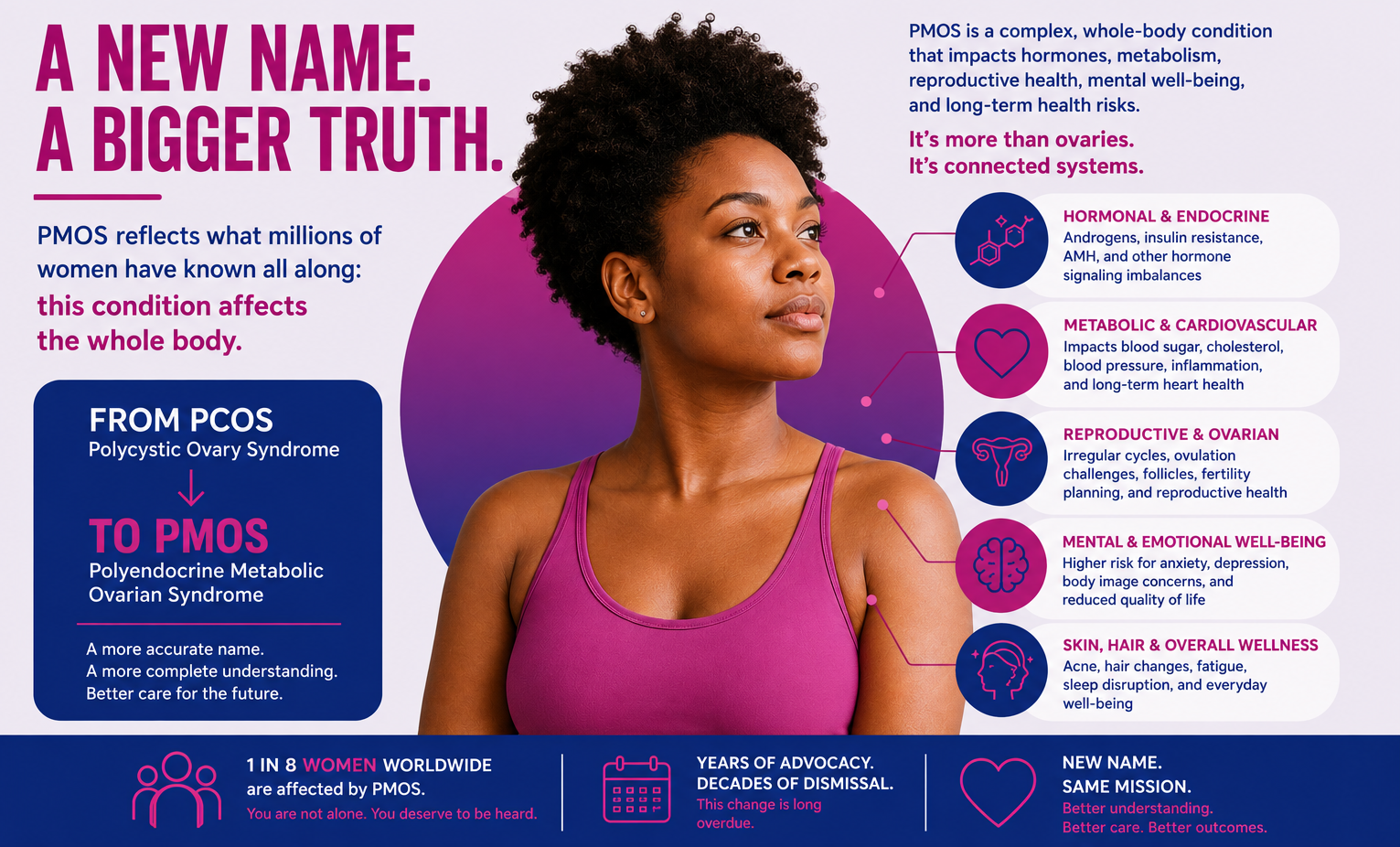
Now, after more than a decade of advocacy, research, and global collaboration, Polycystic Ovary Syndrome (PCOS) has officially been renamed Polyendocrine Metabolic Ovarian Syndrome (PMOS), a major shift that experts say better captures the true complexity of the condition.
And for millions of women, especially Black women who are too often dismissed, misdiagnosed, or forced to advocate for themselves in healthcare settings, this moment feels deeply validating.
This is more than a name change.
It is recognition that this condition affects the whole body, not just the ovaries.
Why the Name Change Matters
For decades, the term “Polycystic Ovary Syndrome” created confusion for patients and even healthcare providers. Many people assumed the condition was simply about ovarian cysts or fertility challenges.
But experts have long argued that understanding was incomplete and, in many cases, misleading.
Many women diagnosed with PCOS never actually had ovarian cysts at all. Meanwhile, symptoms connected to the condition, including insulin resistance, inflammation, irregular periods, anxiety, depression, cardiovascular risks, weight changes, fatigue, and metabolic dysfunction, were often overlooked or minimized.
The new name, Polyendocrine Metabolic Ovarian Syndrome (PMOS), intentionally reflects that this is a complex endocrine and metabolic condition impacting multiple systems throughout the body.
In other words, it acknowledges what patients have been saying all along:
this condition is not “just reproductive.”
A Change Years in the Making
This shift did not happen overnight.
The renaming followed a 14-year international effort involving researchers, clinicians, patient advocates, and dozens of medical organizations around the world. More than 22,000 patients reportedly contributed feedback throughout the process.
That level of collaboration matters because names shape how conditions are researched, diagnosed, treated, and understood publicly.
When a condition is poorly named, it can affect:
- Medical education
- Research funding
- Public awareness
- Insurance coverage
- Diagnosis timelines
- Patient care experiences
For many advocates, PMOS represents a move toward more accurate, whole-person healthcare.
Why This Matters So Much for Black Women
Black women often experience delayed diagnosis and undertreatment for hormonal and reproductive health conditions.
Too many women are told their symptoms are “normal,” blamed on stress, or reduced solely to conversations about weight. Many spend years searching for answers while dealing with painful periods, fatigue, fertility concerns, mental health challenges, and metabolic complications.
At the same time, Black women face disproportionate rates of chronic conditions connected to metabolic health, including diabetes, hypertension, and cardiovascular disease, all areas increasingly recognized as connected to PMOS.
That is why this name change matters beyond medicine.
It creates an opportunity to shift the conversation toward whole-body health, culturally responsive care, and earlier intervention.
It also reinforces something Black women have long known:
our health experiences cannot be reduced to one symptom, one body part, or one stereotype.
What Symptoms Can PMOS Include?
PMOS can affect every woman differently, but symptoms may include:
- Irregular or missed periods
- Excess facial or body hair
- Acne and skin changes
- Hair thinning
- Weight fluctuations
- Insulin resistance
- Fertility challenges
- Fatigue
- Anxiety and depression
- Sleep disturbances
- Difficulty managing blood sugar
Experts estimate the condition affects approximately 1 in 8 women worldwide.
And yet, many cases remain undiagnosed.
This Is About Validation Too
For many women, the shift from PCOS to PMOS feels emotional because it validates years of lived experience.
It acknowledges that women were right when they said this condition was affecting their energy, mental health, metabolism, cardiovascular health, and overall quality of life, not just their reproductive systems.
The change also reflects a larger cultural shift happening in women’s health, one where patient voices and lived experiences are finally being taken more seriously.
There is still significant work ahead.
Women still need:
- Earlier diagnosis
- Better research
- Equitable treatment
- Greater awareness
- More culturally responsive care
- Improved access to specialists and support
But this moment represents progress.
Because when medicine finally finds language that reflects women’s lived experiences more honestly, it opens the door for better understanding, better care, and hopefully, better outcomes for future generations.
A Better Name. A Bigger Truth.
PMOS is not just a new acronym.
It is a reminder that women deserve healthcare that sees the full picture.
And after years of advocacy, many women are finally feeling seen.
Learn More
Read the International Endometriosis Congress article here:
International Endometriosis Congress: PCOS Has a New Name – PMOS
And for additional coverage:
The post PCOS Has a New Name. Why This Long-Awaited Change Matters for Women’s Health. appeared first on Black Women’s Health Imperative.