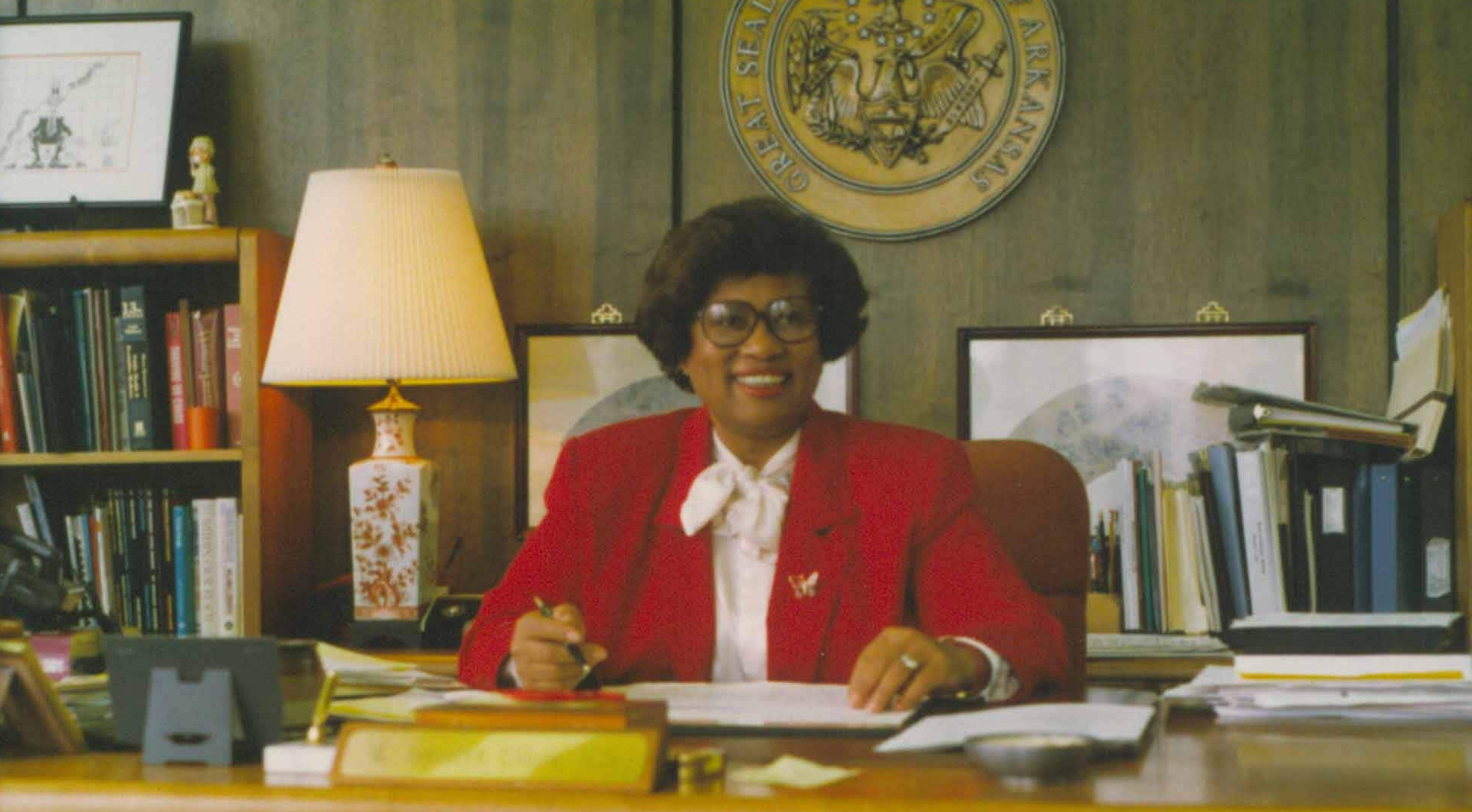
Dr. Jocelyn Elders: A Legacy Bigger Than the Title

This week, as hearings begin for a new Surgeon General, we are reflecting on the kind of leadership public health demands. And as Black History Month comes to a close, one name rises with clarity and conviction: Dr. Jocelyn Elders.
Many know her as the first Black Surgeon General of the United States. Fewer know the full scope of her story.
Dr. Jocelyn Elders was born in rural Arkansas in 1933, the daughter of sharecroppers and one of eight children. She often reflected on her upbringing, saying, “I grew up on a farm in a three-room shack. We didn’t have running water. We didn’t have electricity. No one had health care. There were no health facilities for miles and miles. So I couldn’t grow up wanting to go into public health, or even wanting to be a doctor, because I’d never even heard of that. You can’t be what you can’t see.”
She walked to segregated schools and did not see a Black physician until she was 16 years old. That moment changed the trajectory of her life.
Dr. Elders went on to earn her medical degree from the University of Arkansas School of Medicine and later became the first board-certified pediatric endocrinologist in the state. Her early work focused on children with juvenile diabetes, where she witnessed firsthand how poverty, limited access to care, and lack of education worsened health outcomes.
Her early work focused on children with juvenile diabetes at a time when the disease was poorly understood and often mismanaged. She saw firsthand how poverty, lack of education, and limited access to care worsened outcomes. Long before health equity became a buzzword, she was naming the structural drivers of illness.
Dr. Elders understood that chronic disease is not just biological. It is social. It is economic. It is political.
As Arkansas’ Director of Public Health and later as Surgeon General, she pushed for comprehensive sex education rooted in science, not shame. She spoke openly about contraception, reproductive autonomy, HIV prevention, and the importance of honest conversations with young people. At a time when silence was safer, she chose clarity.
One lesser-known fact: under her leadership in Arkansas, teen pregnancy rates dropped significantly. Immunization rates improved. Access to preventive services expanded. She proved that when you invest in education and prevention, communities thrive.
Her advocacy for reproductive health was grounded in dignity. She believed young people deserved medically accurate information. She believed women deserved control over their bodies. She believed public health should confront reality, not avoid it.
She also consistently connected chronic disease to broader systems. Her work in pediatric endocrinology and juvenile diabetes shaped how she viewed prevention. She knew that lifestyle, access to nutritious food, stable housing, and early education all influence lifelong health outcomes. That through line connects directly to the work we do today.
At the Black Women’s Health Imperative, we talk about menstrual equity. We talk about reproductive justice. We talk about chronic disease prevention. We talk about empowering young people with knowledge and tools.
Dr. Elders was doing all of that decades ago.
Another little-known piece of her story: after leaving federal office, she did not retreat from public life. She continued teaching at the University of Arkansas, mentoring students, and advocating for science-based policy well into her later years. She remained unapologetic about her stance that health policy must reflect lived realities.
Her legacy reminds us that leadership in public health requires courage. It requires telling the truth even when it is uncomfortable. It requires centering those most impacted, not those most powerful.
As we close out Black History Month, we honor Dr. Jocelyn Elders not just as the first, but as a blueprint. A blueprint for bold reproductive health advocacy. For chronic disease prevention that starts early. For youth empowerment rooted in facts. For a public health vision that refuses to separate equity from care.
The hearings this week are about who will lead next.
Our reflection is about who showed us how.
And we are still building on her foundation.
The post Dr. Jocelyn Elders: A Legacy Bigger Than the Title appeared first on Black Women’s Health Imperative.